The Art of Festive Enigma: Exploring Christmas Riddles and Their Benefits
Related Articles: The Art of Festive Enigma: Exploring Christmas Riddles and Their Benefits
Introduction
In this auspicious occasion, we are delighted to delve into the intriguing topic related to The Art of Festive Enigma: Exploring Christmas Riddles and Their Benefits. Let’s weave interesting information and offer fresh perspectives to the readers.
Table of Content
The Art of Festive Enigma: Exploring Christmas Riddles and Their Benefits

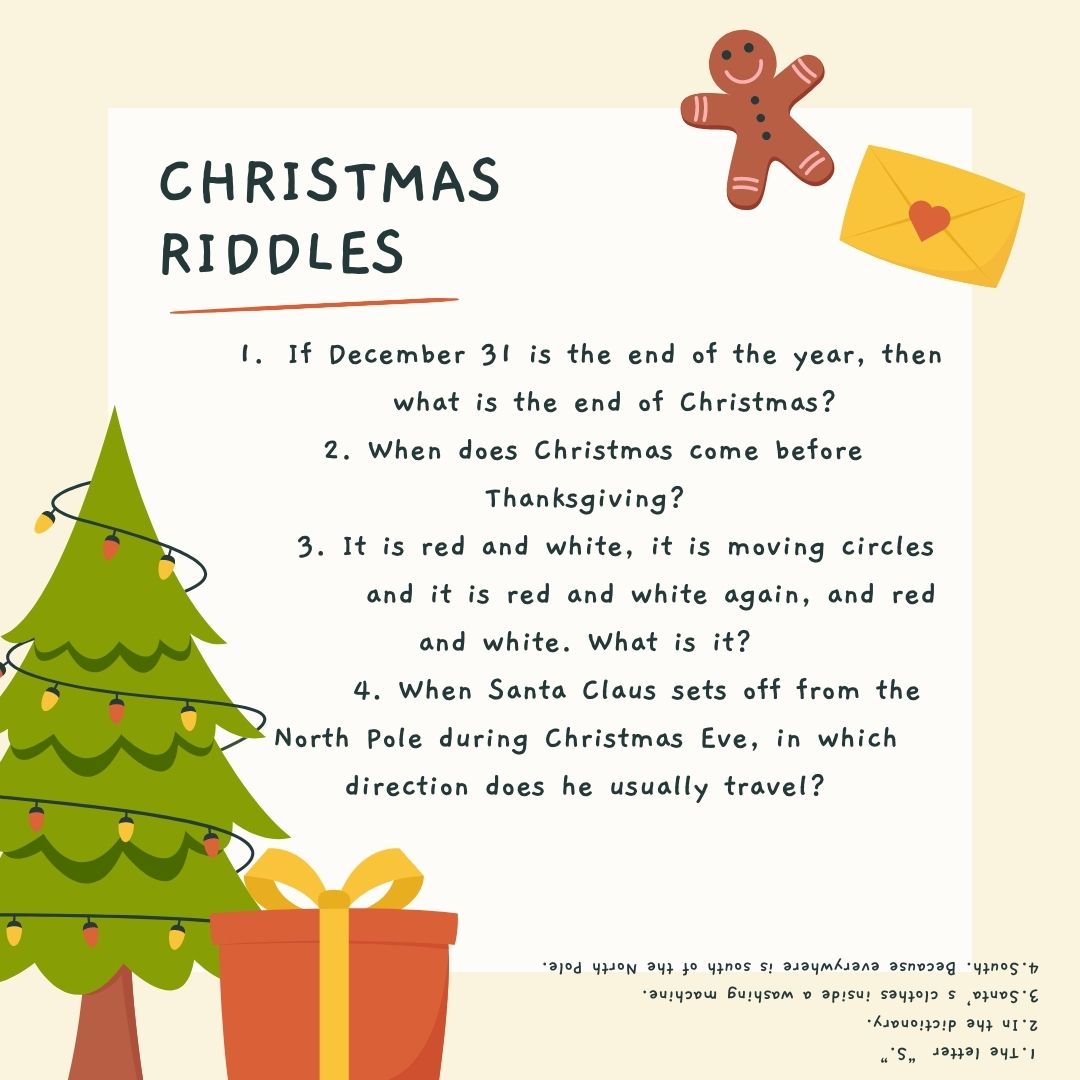
Christmas, a time of joy, celebration, and togetherness, often involves a delightful array of traditions. One such tradition, steeped in the spirit of merriment and intellectual stimulation, is the Christmas riddle quiz. These festive brain teasers, often woven into the fabric of family gatherings, offer a unique way to engage in lighthearted competition while stimulating critical thinking and fostering a sense of shared amusement.
Unveiling the Essence of Christmas Riddles
Christmas riddles, at their core, are word puzzles that challenge participants to decipher a hidden meaning or answer. They typically revolve around themes associated with the holiday, such as:
- Christmas Characters: Santa Claus, Rudolph the Red-Nosed Reindeer, elves, and other beloved figures.
- Christmas Symbols: Christmas trees, ornaments, stockings, snowmen, and other festive decorations.
- Christmas Traditions: Gift giving, caroling, decorating, and other holiday customs.
- Christmas Stories: The Nativity, Santa’s journey, and other classic Christmas narratives.
These riddles can range from simple and straightforward to complex and intricate, offering a challenge for all ages and skill levels. Their appeal lies in their ability to ignite curiosity, encourage creative thinking, and provide a fun and engaging way to celebrate the holiday season.
The Benefits of Incorporating Christmas Riddles
Beyond the inherent enjoyment they provide, Christmas riddles offer a multitude of cognitive and social benefits:
1. Enhanced Cognitive Function:
- Critical Thinking: Solving riddles requires participants to analyze clues, identify patterns, and deduce logical connections, thereby sharpening their critical thinking skills.
- Problem-Solving: The process of deciphering a riddle mirrors the problem-solving process, encouraging participants to think outside the box and consider multiple perspectives.
- Memory Retention: Remembering Christmas-themed clues and answers strengthens memory recall and enhances overall cognitive function.
2. Fostered Social Interaction:
- Shared Experiences: Engaging in a Christmas riddle quiz creates a shared experience that fosters a sense of connection and camaraderie among participants.
- Teamwork and Collaboration: Riddles can be solved individually or as a team, encouraging collaboration and fostering a sense of collective achievement.
- Lighthearted Competition: The friendly competition inherent in riddle quizzes adds a layer of excitement and encourages participants to engage with the puzzles more actively.
3. Cultivated Holiday Spirit:
- Christmas Theme: By focusing on Christmas-related themes, riddles evoke a sense of holiday cheer and create a festive atmosphere.
- Family Bonding: Incorporating riddles into family gatherings provides a fun and engaging activity that strengthens family bonds and creates lasting memories.
- Cultural Enrichment: Riddles often draw from traditional Christmas stories and customs, contributing to the preservation and understanding of holiday traditions.
A Deeper Dive into the World of Christmas Riddles
To fully appreciate the intricacies of Christmas riddles, it is essential to understand their various types, structures, and techniques:
1. Types of Christmas Riddles:
- Simple Riddles: These riddles are straightforward and require minimal deductions. They are ideal for younger children or those new to the world of riddles.
- Tricky Riddles: These riddles often incorporate wordplay, double meanings, or unexpected twists to challenge participants.
- Rhyming Riddles: These riddles incorporate rhyming schemes, adding a playful element to the puzzle.
- Picture Riddles: These riddles present a visual clue, requiring participants to decipher the image and its connection to the Christmas theme.
2. Structures of Christmas Riddles:
- Direct Questions: These riddles pose a direct question, asking participants to identify the answer.
- Descriptive Riddles: These riddles provide a description of the answer, requiring participants to deduce the correct solution.
- Metaphorical Riddles: These riddles use metaphors and analogies to create a more abstract and challenging puzzle.
3. Techniques in Christmas Riddles:
- Wordplay: Riddles often employ puns, homophones, and other wordplay techniques to create a humorous and challenging puzzle.
- Alliteration and Assonance: The use of alliteration and assonance in riddles adds a musical element and enhances their memorability.
- Reverse Logic: Some riddles require participants to think in reverse or consider unconventional approaches to arrive at the answer.
FAQs: Addressing Common Queries About Christmas Riddles
Q: What are some popular Christmas riddles for children?
A: Simple riddles that focus on familiar Christmas characters and symbols are ideal for children. Examples include:
- "I have a red nose, and I guide Santa’s sleigh. What am I?" (Answer: Rudolph)
- "I am a tree that is decorated for Christmas. What am I?" (Answer: Christmas tree)
Q: Where can I find a collection of Christmas riddles?
A: Numerous resources offer collections of Christmas riddles, including:
- Online Websites: Websites dedicated to puzzles and riddles often have sections specifically for Christmas riddles.
- Books: Books dedicated to riddles and brain teasers often include a section on Christmas riddles.
- Holiday Magazines: Holiday-themed magazines often feature Christmas riddles as part of their festive content.
Q: How can I create my own Christmas riddles?
A: Creating your own Christmas riddles can be a fun and rewarding experience. Follow these steps:
- Choose a Christmas theme: Select a character, symbol, tradition, or story to focus on.
- Brainstorm clues: Think of descriptive words, metaphors, or wordplay that relate to your chosen theme.
- Write a question or statement: Craft a question or statement that incorporates your clues and leads to the answer.
- Test your riddle: Have others try to solve your riddle to ensure it is clear, challenging, and engaging.
Tips for Successfully Engaging in a Christmas Riddle Quiz
- Embrace the festive spirit: Approach the quiz with a sense of fun and lightheartedness.
- Pay close attention to clues: Carefully analyze each clue and consider its connection to the Christmas theme.
- Think outside the box: Don’t be afraid to explore unconventional approaches and consider multiple perspectives.
- Don’t be afraid to ask for help: If you’re stuck, don’t hesitate to ask for a hint or guidance from fellow participants.
- Celebrate your successes: Enjoy the satisfaction of solving riddles and acknowledge the achievements of others.
Conclusion: The Enduring Appeal of Christmas Riddles
Christmas riddles, with their unique blend of festive cheer and intellectual stimulation, offer a delightful way to celebrate the holiday season. They encourage critical thinking, foster social interaction, and enhance the overall joy of Christmas gatherings. Whether you are a seasoned riddle enthusiast or a newcomer to the world of festive brain teasers, incorporating Christmas riddles into your holiday celebrations is sure to spark laughter, ignite curiosity, and create lasting memories. As you gather with loved ones this Christmas, consider adding a touch of festive enigma to your celebrations with a Christmas riddle quiz. The joy of deciphering these puzzles, coupled with the spirit of togetherness, will make your holiday season truly unforgettable.



Closure
Thus, we hope this article has provided valuable insights into The Art of Festive Enigma: Exploring Christmas Riddles and Their Benefits. We hope you find this article informative and beneficial. See you in our next article!