The Festive Fun of Christmas Riddles and Jokes: A Comprehensive Exploration
Related Articles: The Festive Fun of Christmas Riddles and Jokes: A Comprehensive Exploration
Introduction
With great pleasure, we will explore the intriguing topic related to The Festive Fun of Christmas Riddles and Jokes: A Comprehensive Exploration. Let’s weave interesting information and offer fresh perspectives to the readers.
Table of Content
The Festive Fun of Christmas Riddles and Jokes: A Comprehensive Exploration

Christmas is a time for joy, laughter, and shared moments with loved ones. Among the many traditions that make this season special, Christmas riddles and jokes hold a unique place, offering a blend of mental stimulation and lighthearted amusement. This exploration delves into the world of Christmas riddles and jokes, examining their origins, evolution, benefits, and the art of crafting them.
The Origins and Evolution of Christmas Riddles and Jokes:
The tradition of riddles and jokes dates back centuries, with roots in ancient folklore and storytelling. Early riddles often served practical purposes, testing knowledge and problem-solving skills. As society evolved, riddles transitioned into forms of entertainment and social interaction.
Christmas, with its rich history and symbolism, provided fertile ground for the development of holiday-themed riddles and jokes. Early examples likely centered around themes of winter, snow, and the Nativity story. Over time, these riddles and jokes incorporated contemporary cultural references and evolving holiday traditions, reflecting the changing social landscape.
Benefits of Christmas Riddles and Jokes:
Beyond their entertainment value, Christmas riddles and jokes offer numerous benefits:
- Cognitive Stimulation: Engaging with riddles requires critical thinking, problem-solving, and creative reasoning, stimulating the mind and enhancing cognitive agility.
- Language Development: Riddles and jokes often play with words, requiring an understanding of vocabulary, grammar, and figurative language, fostering language development and vocabulary expansion.
- Family Bonding: Sharing riddles and jokes fosters a sense of connection and shared laughter, strengthening family bonds and creating lasting memories.
- Social Interaction: Riddles and jokes can spark conversations, break the ice, and create a lighthearted atmosphere, promoting social interaction and strengthening relationships.
- Cultural Preservation: Christmas riddles and jokes often reflect cultural traditions and values, helping to preserve and transmit these elements to future generations.
The Art of Crafting Christmas Riddles and Jokes:
Crafting effective Christmas riddles and jokes requires a blend of creativity, wit, and an understanding of the holiday’s themes and symbolism. Here are some key elements to consider:
- Relevance: Riddles and jokes should be relevant to Christmas, drawing on familiar themes like Santa Claus, reindeer, presents, snow, and the Nativity story.
- Wordplay: Effective riddles and jokes often employ wordplay, puns, and double meanings to create humor and surprise.
- Clarity: While riddles should be challenging, they should also be clear and concise, avoiding ambiguity and confusion.
- Humor: The goal of Christmas riddles and jokes is to evoke laughter and lightheartedness. Riddles should be funny, engaging, and entertaining.
Frequently Asked Questions (FAQs) about Christmas Riddles and Jokes:
Q: What are some popular Christmas riddle themes?
A: Popular Christmas riddle themes include:
- Santa Claus: Riddles about Santa’s appearance, reindeer, sleigh, and gift-giving abilities.
- Christmas Decorations: Riddles about Christmas trees, ornaments, lights, and other decorations.
- Christmas Traditions: Riddles about carols, gift-giving, holiday feasts, and other traditions.
- Winter: Riddles about snow, ice, cold weather, and winter activities.
- The Nativity Story: Riddles about the birth of Jesus, the three wise men, and other biblical figures.
Q: What are some tips for creating Christmas riddles?
A: Here are some tips for crafting effective Christmas riddles:
- Start with a familiar theme: Choose a theme that is relevant to Christmas and easily understood by your audience.
- Use wordplay: Incorporate puns, double meanings, and other forms of wordplay to make your riddles more engaging and humorous.
- Keep it concise: Riddles should be clear, concise, and easy to understand.
- Provide a challenge: Riddles should be challenging but solvable, creating a sense of satisfaction when the answer is revealed.
- Test your riddles: Share your riddles with others and get feedback to ensure they are enjoyable and effective.
Q: What are some examples of classic Christmas riddles?
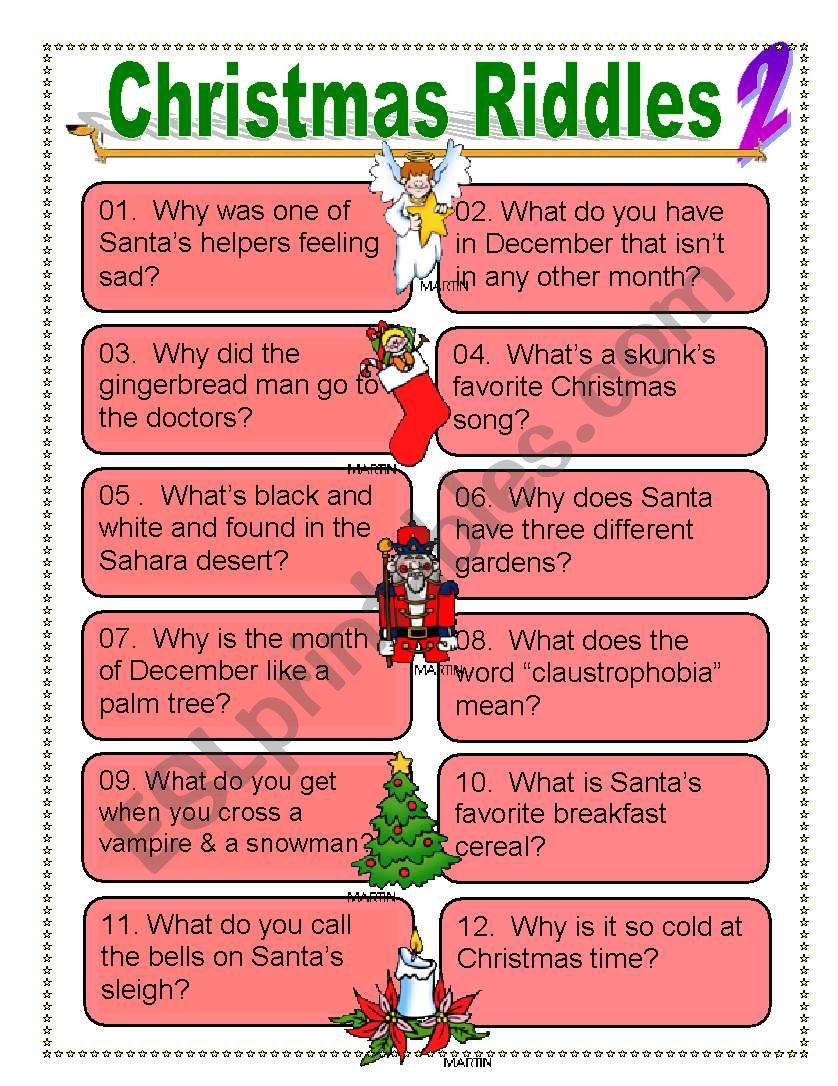
A: Here are some classic Christmas riddles:
- What has a neck without a head, a body without legs, and can be found under a Christmas tree? (Answer: A Christmas bottle)
- What do you get when you cross a snowman and a street dog? (Answer: Frostbite)
- What has one head, one foot, and four legs? (Answer: A bed)
Conclusion:
Christmas riddles and jokes are a delightful addition to the holiday season, offering entertainment, cognitive stimulation, and opportunities for bonding with loved ones. By understanding their origins, benefits, and the art of crafting them, we can appreciate the unique charm and joy that these festive puzzles bring to our celebrations. Whether you are seeking a lighthearted challenge, a way to spark conversation, or a fun way to engage children, Christmas riddles and jokes provide a timeless source of amusement and connection.





Closure
Thus, we hope this article has provided valuable insights into The Festive Fun of Christmas Riddles and Jokes: A Comprehensive Exploration. We hope you find this article informative and beneficial. See you in our next article!