Unwrapping the Joy of Christmas Math Riddles
Related Articles: Unwrapping the Joy of Christmas Math Riddles
Introduction
With enthusiasm, let’s navigate through the intriguing topic related to Unwrapping the Joy of Christmas Math Riddles. Let’s weave interesting information and offer fresh perspectives to the readers.
Table of Content
Unwrapping the Joy of Christmas Math Riddles
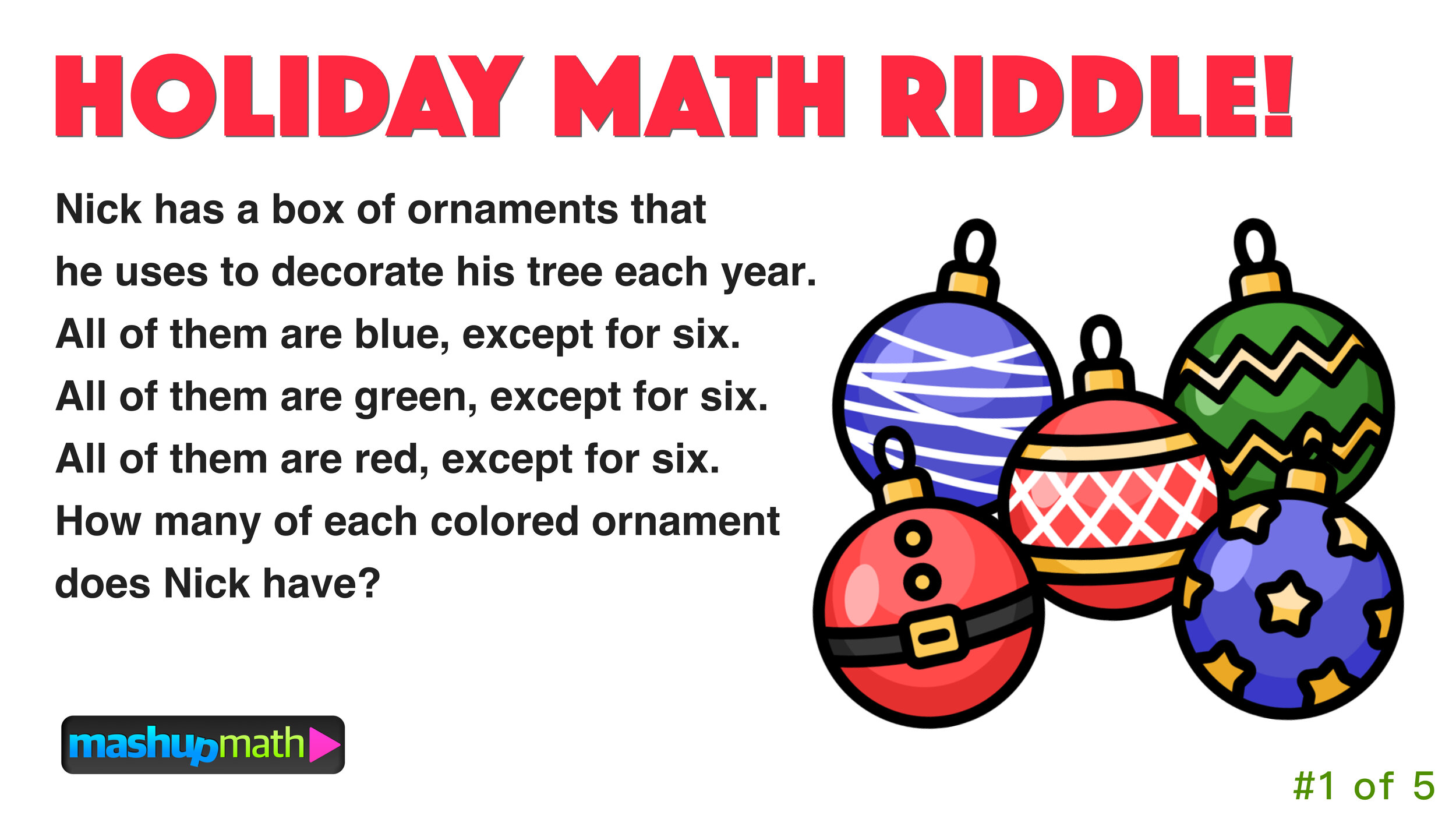
The festive season, steeped in traditions and merriment, offers a unique opportunity to engage in a playful exploration of mathematics. Christmas math riddles, cleverly weaving together holiday themes with numerical puzzles, provide a delightful way to stimulate critical thinking and problem-solving skills. These riddles, often presented in a whimsical and engaging manner, invite participants to delve into the world of numbers, logic, and creative deduction.
The Appeal of Christmas Math Riddles:
Christmas math riddles transcend the traditional perception of mathematics as a dry and complex subject. Their ability to blend festive imagery with mathematical concepts makes them accessible and enjoyable for individuals of all ages and mathematical backgrounds. The riddles often draw inspiration from iconic elements of Christmas, such as Santa Claus, reindeer, presents, and the Christmas tree, creating a relatable and engaging context for problem-solving.
Types of Christmas Math Riddles:
Christmas math riddles can be categorized into various types, each presenting a unique challenge and requiring different approaches to solve:
-
Word Problems: These riddles present a scenario related to Christmas, often involving quantities, ratios, or calculations. For instance, a riddle might ask about the number of presents Santa needs to deliver, considering the number of houses and the average number of children per household.
-
Logic Puzzles: These riddles require logical reasoning and deduction to arrive at the correct answer. A classic example is a riddle involving the arrangement of ornaments on a Christmas tree, with clues about their colors, positions, and relationships.
-
Number Puzzles: These riddles focus on numerical patterns, sequences, or operations. They might involve finding the missing number in a Christmas-themed sequence or solving a simple equation with Christmas-related terms.
-
Geometric Riddles: These riddles explore geometric concepts like area, perimeter, or volume, often using Christmas-themed shapes like snowflakes or stars. A riddle might ask for the area of a Christmas stocking or the volume of a Christmas tree ornament.
Benefits of Engaging with Christmas Math Riddles:
Engaging with Christmas math riddles offers numerous benefits, fostering:
-
Critical Thinking: Solving these riddles encourages individuals to analyze information, identify patterns, and develop logical arguments.
-
Problem-Solving Skills: By tackling the challenges presented by the riddles, participants learn to break down complex problems into smaller, manageable steps and apply appropriate strategies to find solutions.
-
Mathematical Reasoning: The riddles provide a practical context for applying mathematical concepts, helping individuals understand their relevance and application in real-world scenarios.
-
Cognitive Stimulation: The mental exercise involved in solving these riddles keeps the mind sharp and active, promoting cognitive agility and enhancing mental flexibility.
-
Enjoyment and Engagement: The festive theme and playful nature of the riddles make the learning process enjoyable and engaging, fostering a positive attitude towards mathematics.
Examples of Christmas Math Riddles:
To illustrate the diverse range of Christmas math riddles, here are a few examples:
Word Problem:
Santa has 100 presents to deliver, and he needs to visit 20 houses. If each house has an average of 2 children, how many presents will each child receive?
Logic Puzzle:
There are four Christmas ornaments: a red ball, a green star, a silver bell, and a gold snowflake. The red ball is to the left of the green star. The silver bell is to the right of the gold snowflake. The gold snowflake is not next to the red ball. What is the order of the ornaments from left to right?
Number Puzzle:
What is the next number in the following sequence: 1, 2, 4, 8, 16, __?
Geometric Riddle:
A Christmas stocking has a length of 12 inches and a width of 6 inches. What is the area of the stocking?
FAQs about Christmas Math Riddles:
Q: Are Christmas math riddles appropriate for all ages?
A: Yes, Christmas math riddles can be adapted to suit different age groups. Simpler riddles with basic arithmetic can be used for younger children, while more complex riddles involving algebra or geometry can be presented to older children and adults.
Q: Where can I find Christmas math riddles?
A: There are numerous resources available online and in print that offer a collection of Christmas math riddles. Websites dedicated to educational resources, puzzle books, and holiday-themed publications often feature these riddles.
Q: How can I create my own Christmas math riddles?
A: To create your own Christmas math riddles, consider the following tips:
-
Choose a Christmas theme: Select a specific element of Christmas, such as Santa Claus, reindeer, presents, or the Christmas tree, as the basis for your riddle.
-
Incorporate mathematical concepts: Include numerical values, operations, patterns, or geometric shapes in your riddle.
-
Make it challenging but solvable: Aim for a level of difficulty that is appropriate for your target audience, ensuring the riddle can be solved with a bit of effort.
-
Be creative and engaging: Use imaginative language and a festive tone to make your riddle enjoyable and memorable.
Tips for Solving Christmas Math Riddles:
-
Read the riddle carefully: Pay attention to all the details and clues provided.
-
Identify the key information: Determine the relevant numbers, operations, or relationships involved in the riddle.
-
Use appropriate strategies: Apply your knowledge of mathematics and problem-solving techniques to find the solution.
-
Check your answer: Ensure your answer makes sense in the context of the riddle and satisfies all the conditions.
Conclusion:
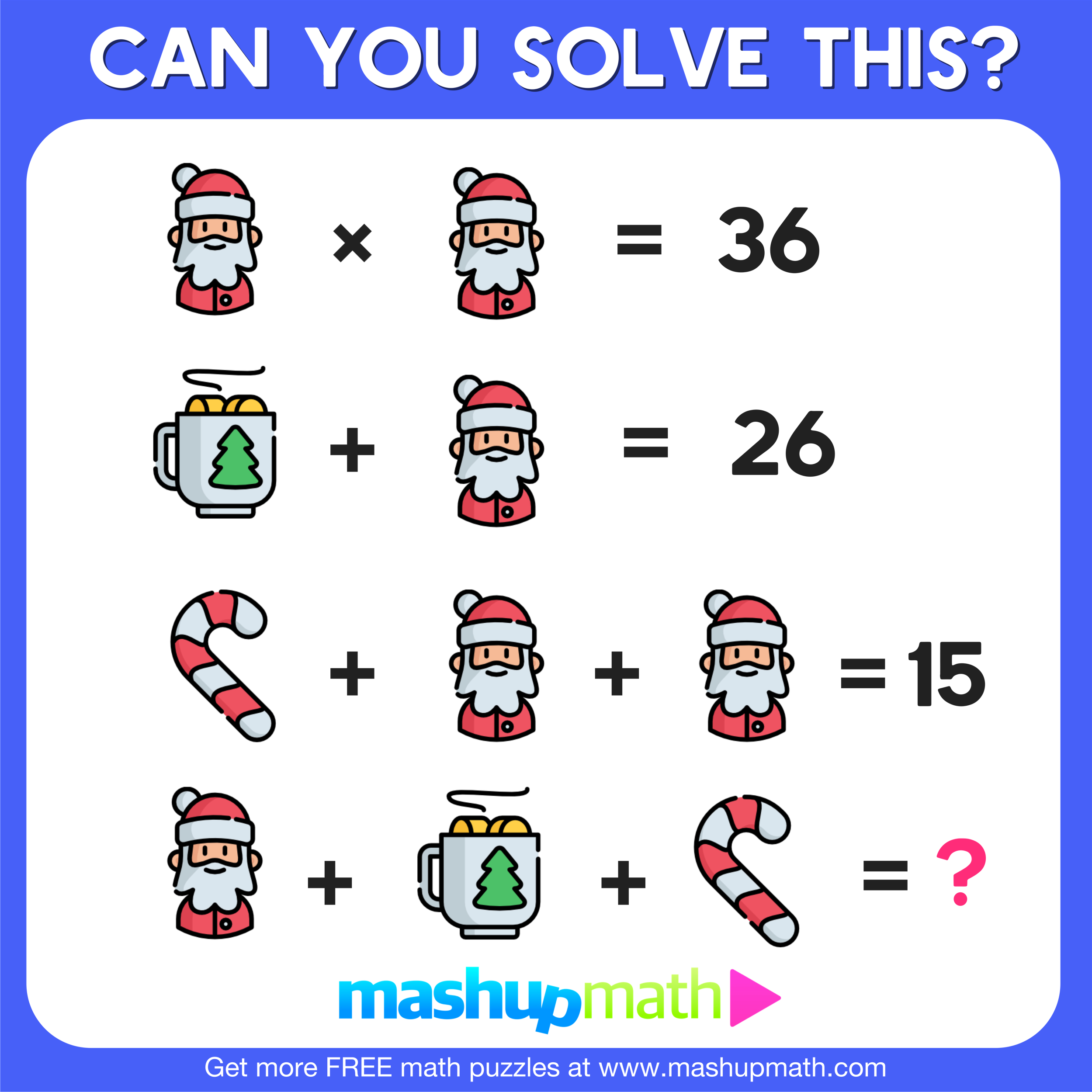
Christmas math riddles offer a unique and engaging way to explore the world of mathematics during the festive season. By blending holiday themes with numerical puzzles, these riddles provide a fun and stimulating learning experience for individuals of all ages. They encourage critical thinking, problem-solving skills, and mathematical reasoning, while fostering a positive attitude towards mathematics. As you gather with loved ones this Christmas, consider sharing these riddles and embracing the joy of unwrapping the magic of Christmas math.




Closure
Thus, we hope this article has provided valuable insights into Unwrapping the Joy of Christmas Math Riddles. We hope you find this article informative and beneficial. See you in our next article!